

You just finished – or you're about to finish – your digital marketing course. You know SEO, social media, ads, maybe a bit of design and content too. And now you're staring at one question that nobody really answered for you in class: what do I actually do with all this now?
Maybe you're a 12th pass student figuring out if this is a real career or just a backup plan. Maybe you're preparing for a competitive exam and testing the waters on the side. Maybe you're a graduate who wants something practical, or a working professional looking to switch lanes. Whoever you are, this guide is built to answer one thing clearly: what your options are, and exactly how to start taking one of them today.
What You Learn in a Digital Marketing Course
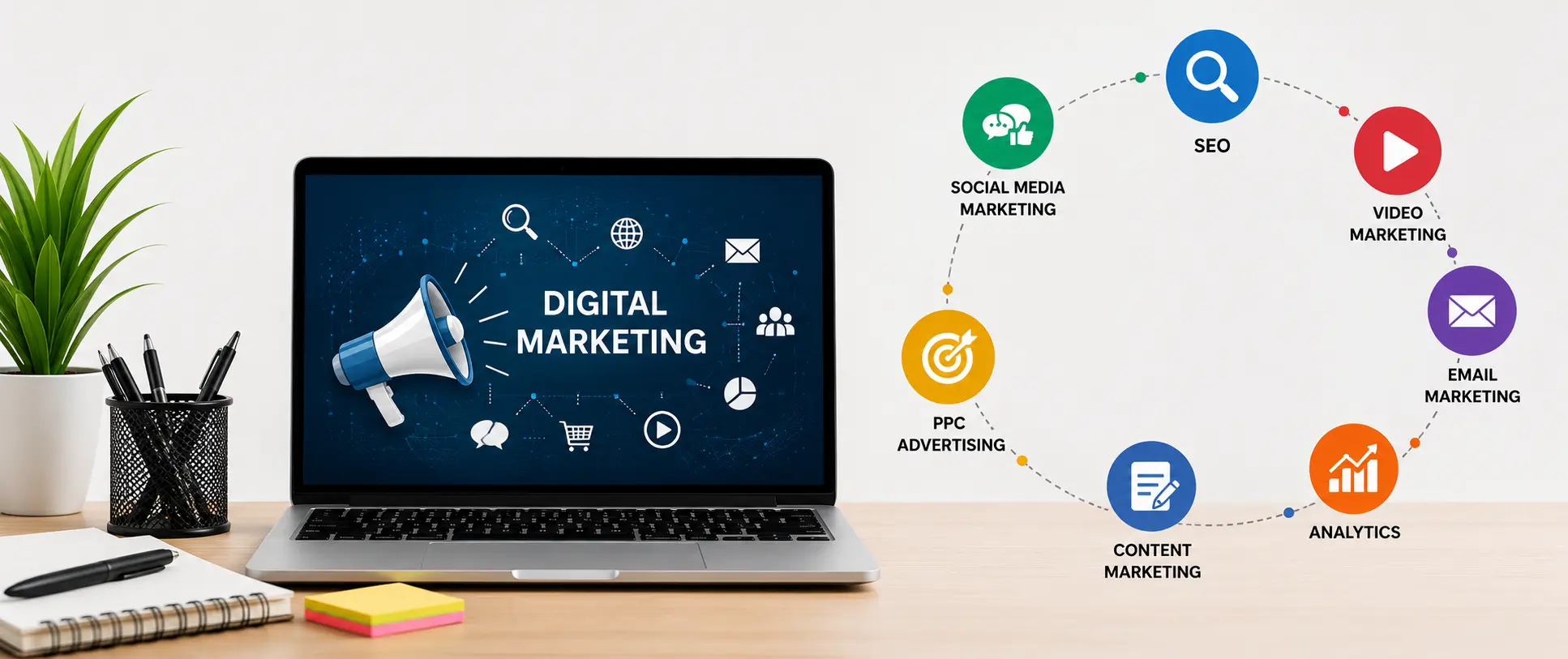
A good digital marketing course – like the one at HTS India – is designed to move you from zero to job-ready across every major channel. Here's what you'll typically cover:
Search Engine Optimization (SEO)
What it is: Getting websites to rank higher on Google without paying for ads. What you can do with it: Audit websites, research keywords, write SEO-friendly content, and help businesses get free, long-term traffic.
Google Ads (PPC)
What it is: Running paid ad campaigns on Google Search, Display, and YouTube. What you can do with it: Set up and manage ad campaigns that bring in leads and sales for a fixed budget – a skill businesses pay well for.
Meta Ads & Social Media Marketing (SMO)
What it is: Running paid campaigns and organic content strategy on Facebook, Instagram, and increasingly LinkedIn. What you can do with it: Grow a brand's following, run ad campaigns that convert, and manage a business's entire social presence.
Canva & Basic Graphic Design
What it is: Creating visual content – posts, reels covers, banners, carousels – without needing advanced design software. What you can do with it: Produce scroll-stopping visuals for brands, personal creators, or your own portfolio.
WordPress Website Development
What it is: Building functional websites without writing code from scratch. What you can do with it: Build and launch static sites, business websites, and basic e-commerce stores for real clients.
Email Marketing
What it is: Sending targeted emails to nurture leads and drive repeat sales. What you can do with it: Set up email funnels, newsletters, and automation sequences – one of the highest-ROI skills in marketing.
Affiliate & Content Marketing
What it is: Promoting other people's products for a commission, and creating content that builds trust and traffic. What you can do with it: Build an income stream that doesn't depend on a single employer or client.
Once you have these skills, here is what becomes possible for you.
Pick Your Path: Specialist or Complete Digital Marketer?
Here's something most institutes don't tell you clearly enough: you don't have to be good at everything.
Once you've gone through all the modules, you have two real choices:
- Go deep on one module – become the SEO person, the Meta Ads person, the WordPress person. Specialists are often trusted faster and can charge more once they build a track record in one thing.
- Stay broad and become a Complete Digital Marketer – someone who can run a small business's entire online presence solo. This path suits people who want to freelance independently or eventually run their own agency.
Neither is "better." Your personality, patience, and what excites you during the course should decide this – not what pays more on paper.
Career Paths You Can Choose
SEO Executive / SEO Professional
What you will do: On a normal day, you'll research keywords, check why certain pages aren't ranking, fix technical issues on a website, write or edit content for search intent, and check ranking reports. It's part detective work, part writing, part patience.
Who hires for this role: Digital marketing agencies, e-commerce brands, SaaS startups, real estate companies, and any business with a website that needs traffic.
Starting salary range: ₹15,000–₹22,000/month for freshers; ₹28,000–₹40,000/month with 1–2 years experience. Salaries vary by city, company size, and your portfolio strength.
Skills that give you an edge: Basic HTML understanding, Google Search Console and Google Analytics proficiency, and a Google Analytics or SEMrush certification.
Is this right for you if… This path suits you if you enjoy problem-solving and are comfortable with slow, compounding results rather than instant wins.
Google Ads (PPC) Specialist
What you will do: You'll set up campaigns, choose keywords or audiences to target, write ad copy, check spend versus results daily, and adjust bids to stop wasted budget. This role is numbers-heavy and fast-paced.
Who hires for this role: Performance marketing agencies, e-commerce brands, ed-tech companies, and local businesses like clinics or real estate agents who need leads fast.
Starting salary range: ₹18,000–₹25,000/month for freshers; ₹30,000–₹45,000/month with experience. Salaries vary by city, company size, and your portfolio strength.
Skills that give you an edge: Google Ads certification, basic Excel/Google Sheets for reporting, and familiarity with landing page conversion basics.
Is this right for you if… This path suits you if you enjoy working with numbers and don't mind being accountable for a client's ad spend every single day.
Social Media Manager / SMO Specialist
What you will do: You'll plan content calendars, write captions, coordinate with designers (or design yourself), schedule posts, reply to comments and DMs, and track what content is actually working.
Who hires for this role: D2C brands, restaurants and cafes, personal creators, fashion and beauty businesses, and digital agencies managing multiple client accounts.
Starting salary range: ₹14,000–₹20,000/month for freshers; ₹25,000–₹35,000/month with experience. Salaries vary by city, company size, and your portfolio strength.
Skills that give you an edge: Canva or basic design skills, short-form video editing (Reels/Shorts), and an eye for trends.
Is this right for you if… This path suits you if you enjoy creativity and don't mind the pressure of staying constantly online and current.
Meta Ads Expert
What you will do: You'll build audiences, design ad creatives or work with a designer, launch and monitor Facebook and Instagram ad campaigns, and optimize based on cost-per-result.
Who hires for this role: D2C and fashion brands, real estate developers, coaching institutes, and performance marketing agencies.
Starting salary range: ₹16,000–₹24,000/month for freshers; ₹28,000–₹42,000/month with experience. Salaries vary by city, company size, and your portfolio strength.
Skills that give you an edge: Meta Blueprint certification, basic copywriting, and comfort reading ad performance dashboards.
Is this right for you if… This path suits you if you like fast feedback loops and enjoy testing and tweaking things until they work.
WordPress Website Developer
What you will do: You'll build websites using themes and page builders, customize layouts, set up basic e-commerce stores, fix small bugs, and make sites mobile-friendly and fast-loading.
Who hires for this role: Small businesses, agencies needing overflow web work, freelance clients, and startups that need a quick, functional site without a full dev team.
Starting salary range: ₹15,000–₹22,000/month for freshers; ₹25,000–₹40,000/month with experience – often higher through freelance projects. Salaries vary by city, company size, and your portfolio strength.
Skills that give you an edge: Basic HTML/CSS, familiarity with plugins like Elementor and WooCommerce, and basic site speed optimization knowledge.
Is this right for you if… This path suits you if you're detail-oriented and enjoy building tangible things you can point to and say "I made that."
Email Marketer
What you will do: You'll write email campaigns, set up automated sequences (welcome emails, abandoned cart, etc.), segment audiences, and track open and click rates.
Who hires for this role: E-commerce brands, SaaS companies, ed-tech platforms, and any business with an existing customer list they want to sell more to.
Starting salary range: ₹15,000–₹20,000/month for freshers; ₹25,000–₹35,000/month with experience. Salaries vary by city, company size, and your portfolio strength.
Skills that give you an edge: Copywriting ability, familiarity with tools like Mailchimp or Klaviyo, and basic A/B testing understanding.
Is this right for you if… This path suits you if you enjoy writing persuasively and like working behind the scenes rather than being on camera or on calls.
Freelancer (Multi-Skill)
What you will do: You'll juggle 2–4 clients at a time, handle everything from proposals to delivery, manage your own schedule, and constantly look for the next project while finishing the current one.
Who hires for this role: Small business owners, solo entrepreneurs, and international clients found through freelance platforms.
Starting salary range: Highly variable – often ₹10,000–₹30,000/month starting out, scaling to ₹50,000+/month once you build repeat clients. Salaries vary by city, company size, and your portfolio strength.
Skills that give you an edge: Basic client communication and negotiation skills, invoicing know-how, and the discipline to work without a fixed schedule.
Is this right for you if… This path suits you if you value independence and are comfortable with income that isn't fixed every month.
Affiliate Marketer
What you will do: You'll pick a niche, build an audience (blog, Instagram, YouTube, or WhatsApp channel), recommend products you genuinely believe in, and earn a commission on resulting sales.
Who hires for this role: No one "hires" you – you partner directly with brands or affiliate networks like Amazon Associates, Cuelinks, or EarnKaro.
Starting salary range: Highly variable and often ₹0 for the first few months while you build an audience; can scale to ₹15,000–₹50,000+/month once traffic builds.
Skills that give you an edge: Basic content creation, SEO or social media growth skills, and patience – this path is slow to start.
Is this right for you if: This path suits you if you're willing to invest months before seeing income, in exchange for a business that isn't tied to hourly work.
Complete Digital Marketer
What you will do: You'll run a business's entire online presence – SEO, ads, social media, email, and basic design – either as an in-house hire for a small company or as a freelancer managing everything for one or two clients.
Who hires for this role: Small and medium businesses that can't afford a full marketing team, and startups in their early stage.
Starting salary range: ₹18,000–₹28,000/month for freshers; ₹35,000–₹55,000/month with experience, often higher in freelance or agency-owner setups. Salaries vary by city, company size, and your portfolio strength.
Skills that give you an edge: Basic proficiency across all channels rather than deep expertise in one, plus strong time-management and prioritization skills.
Is this right for you if… This path suits you if you enjoy variety and don't want to be boxed into one narrow skill.
Freelancing – Working for Yourself
Freelancing in digital marketing is one of the fastest ways to start earning without waiting for a "real job" to open up. But it needs a realistic approach, not wishful thinking.
Getting your first client with zero experience: Don't wait for strangers to hire you. Start with people you already know – a relative's shop, a friend's small business, a local store near you. Offer to do one project (a social media page audit, a basic SEO fix, a set of Canva posts) either free or at a token price, purely to get your first real result and testimonial. That one case study becomes your opening line with every future client.
Pricing as a beginner: Price by project, not by hour, when starting out – it's easier for clients to understand and for you to estimate. Look at what similar freelancers charge on Indian platforms and price 10–20% below that initially, then raise your rates every 3–4 clients as your portfolio grows.
Moving from part-time to full-time freelancing: Don't quit a job or leave your studies until you have at least 3 repeat clients or a steady 2–3 months of consistent freelance income. Full-time freelancing works best once you already have proof that clients pay you reliably.
Trusted Freelance Platforms for Digital Marketing
- Fiverr – best for quick, packaged services (SEO audits, Canva design packs, social media posts) – fiverr.com
- Upwork – best for longer projects and retainer-style clients – upwork.com
- Truelancer – India-based, good for beginners building their first few projects – truelancer.com
- LinkedIn Services Marketplace – best for B2B professional services and getting found by business owners directly – linkedin.com/services
- PeoplePerHour – best for UK and Europe-based clients – peopleperhour.com
- Guru – solid for a mix of technical and creative marketing work – guru.com
- WorkNHire – India-focused, useful for local project listings – workNhire.com
Starting Your Own Business or Agency
Once you've freelanced for a while and built a few solid client relationships, starting a small agency is a realistic next step – not immediately, but after you've proven you can deliver consistently.
What's realistic to start with: A one- or two-person setup handling 3–5 small retainer clients (local businesses, small D2C brands) is far more realistic than trying to compete with established agencies from day one.
What the first 90 days actually look like: Month 1 is mostly outreach and proposal-writing with very few "yeses." Month 2 usually brings your first 1–2 clients, and most of your time goes into delivery, not new sales. Month 3 is where you start refining your pricing and process based on what you learned. It is slow, and that is normal.
What you need before you start: A simple portfolio (even 2–3 strong case studies), a pricing sheet, a way to invoice (even a basic template), and at least one client lined up before you call yourself an "agency."
Common mistakes beginners make: Underpricing so heavily that the work becomes unsustainable, taking on too many clients before systems are in place, and not setting clear deliverables upfront – leading to scope creep and unpaid extra work. Avoid this by putting every deliverable in writing before starting.
How to Build Your Portfolio From Scratch
Here's the truth: a certificate gets you an interview. A portfolio gets you the job or the client. Most students finish their course with the certificate and stop there – that's the gap you need to close.
You don't need real clients to build a real portfolio. Here's how:
- Canva Designer path: Create a set of mock social media posts, reels covers, and carousel designs for a fictional or real local brand. Post them as a themed collection.
- WordPress Developer path: Build 2–3 dummy websites – a static business site, a basic e-commerce store using WooCommerce, and a portfolio site for yourself. Host them live, even on free hosting, so they're clickable, not just screenshots.
- SEO Professional path: Run a full SEO audit on a real (or your own) website and turn it into a clean report – issues found, fixes recommended, and expected impact.
- PPC/SMO path: Build a hypothetical Google Ads or Meta Ads campaign structure – target audience, budget split, ad copy, and expected results – even without real ad spend.
What to include in your portfolio:
- A live or mock SEO audit report
- A social media content calendar with sample posts
- A Google Ads or Meta Ads campaign structure (real or hypothetical)
- An analytics report with insights and recommendations
- A before/after case study, even from a personal or practice project
- Two to three dummy or live websites (if going the WordPress route)
- Relevant certifications: Google, Meta, HubSpot Academy, SEMrush Academy
Where to host your portfolio:
- A simple personal website – best for showing everything in one place; build it using the WordPress skills from your own course
- Behance – best for visually showcasing Canva and design work – behance.net
- LinkedIn Featured section – best for getting your work seen by recruiters directly on your profile
- Google Drive (organized folder, shared publicly) – best as a low-cost backup option when starting out
Where to Find Jobs – Portals You Can Trust
- LinkedIn – Best for networking and professional roles across experience levels. Tip: Post about projects you're working on, not just your resume – recruiters in digital marketing often reach out to people who show visible activity. linkedin.com
- Naukri.com – India's largest job board, wide range of experience levels. Tip: Keep your profile updated weekly – Naukri's algorithm favors recently active profiles in search results. naukri.com
- Indeed India – Broad listings across company sizes. Tip: Use specific search terms like "SEO executive fresher" instead of just "digital marketing" to cut down irrelevant results. indeed.co.in
- Internshala – Best for internships and fresher-level roles – the best starting point for students. Tip: Apply within the first 24 hours of a posting going live; response rates drop sharply after that. internshala.com
- Shine – Mid-level roles and steady listings from established companies. shine.com
- Foundit (formerly Monster) – Experienced-level roles at established companies. foundit.in
- Wellfound (AngelList) – Startup jobs, especially early-stage companies. wellfound.com
- Cutshort – Tech and digital-focused roles with faster recruiter response. cutshort.io
- Instahyre – Getting contacted directly by recruiters rather than applying cold. instahyre.com
Research Companies Before You Apply – Websites You Can Trust
Getting an offer feels exciting, but accepting the wrong one can cost you months. Before you say yes to any role, spend 20 minutes checking who you're actually about to work for – this single habit protects you from toxic workplaces, unpaid "training periods," and companies that simply vanish.
- Glassdoor – Employee reviews, salary data, interview experiences. Tip: Filter reviews by "current employee" and check the most recent 6 months – older reviews may not reflect the current culture.
- AmbitionBox – India-specific company reviews, salary benchmarks, and real interview questions. Tip: One of the most reliable sources for Indian company culture insights, especially for small and mid-size firms.
- Google Reviews – A quick, honest pulse-check, especially for smaller local businesses that don't have Glassdoor listings. Tip: Read the 1-star and 3-star reviews carefully – 5-star reviews are sometimes incentivized.
- LinkedIn Company Pages – Understanding company size, growth trajectory, and how long people typically stay. Tip: Check employee tenure on individual profiles – high turnover across many employees is a red flag.
- Indeed Company Reviews – A broader range of reviews, including from non-marketing employees. Tip: Read reviews from people in roles similar to yours, not just the overall rating.
- MCA21 / Ministry of Corporate Affairs (mca.gov.in) – Verifying if a company is legitimately registered in India. Tip: Always check registration before accepting an offer from a small or unfamiliar company.
Certifications That Make You Stand Out
Must-have:
- Google Digital Garage / Fundamentals of Digital Marketing – Free, widely recognized as a baseline credential
- Google Ads Certification – Free, essential if pursuing PPC
- Meta Blueprint Certification – Free, essential for Social Media/Meta Ads roles
Good-to-have:
- HubSpot Academy (Content Marketing / Inbound Marketing) – Free, respected for content-focused roles
- SEMrush Academy (SEO Certification) – Free, strong signal for SEO-focused roles
- Google Analytics (GA4) Certification – Free, valuable across almost every specialization
Realistic Timeline – What to Expect in Your First Year
Month 1–2: Build Your Foundation – Focus on finishing your portfolio pieces, getting your first 2–3 certifications, and cleaning up your LinkedIn profile – headline, summary, and featured section.
Month 3–4: Start Applying and Freelancing – Begin applying to fresher roles daily and simultaneously reach out to 2–3 potential freelance clients (even people you know). Don't wait for the "perfect" opening.
Month 5–6: First Role or Steady Freelance Income – Many students land their first role or first repeat client around this point. If you haven't yet, that's normal – this is often when consistency starts paying off, not before.
Month 7–12: Growth and Specialisation – This is when you decide whether to specialize deeper in one module or continue as a generalist. Use this period to negotiate your first raise, take on a bigger freelance client, or start building toward your own small agency.
Frequently Asked Questions
Is digital marketing a good career in India in 2026? Yes. As more Indian businesses move online, demand for skilled digital marketers keeps growing across every city, not just metros. It also offers flexibility – you can work in-house, freelance, or build your own agency with the same core skill set. To know more about the course syllabus, fees, and career roadmap you can also read this informative blog.
How much does a fresher digital marketer earn in India? Freshers typically start between ₹15,000–₹25,000/month depending on the specific role, city, and company size. Freelancers often earn variably in the early months before income stabilizes.
Can I get a job after a 3-month digital marketing course? Yes, but only if you pair the course with a genuine portfolio. Employers rarely hire on the certificate alone – showing 2–3 real or mock projects significantly improves your chances right after finishing.
Is freelancing in digital marketing better than a full-time job? Neither is universally better. Freelancing offers flexibility and unlimited income potential but less stability early on. A full-time job offers steady income and mentorship while you're still learning the ropes.
Which digital marketing skill is highest paid? Google Ads (PPC) and Meta Ads specialists often command higher pay because their work is directly tied to measurable revenue for a business. However, SEO and complete digital marketing skills tend to offer more long-term freelance stability.
Do I need to know coding to work in digital marketing? No. Basic HTML/CSS helps for WordPress and technical SEO work, but most digital marketing roles – social media, PPC, email, content – need zero coding knowledge.
Conclusion
You now have the full map: pick a module to go deep on or stay broad as a complete digital marketer, build proof of your skills even without paid clients, use trusted portals to find internships and jobs, and always research a company before you accept an offer. The course gave you the foundation – what you build on it from here is entirely up to you.
If you're still exploring which course fits your goals, HTS India's counsellors are available to guide you.
Still have questions about which path suits you best? Book a free, no‑obligation career call with one of our mentors — they'll help you build a personalised roadmap.